Sam Altman Interview Breakdown: Key Insights on AGI, Sora & AI Compute
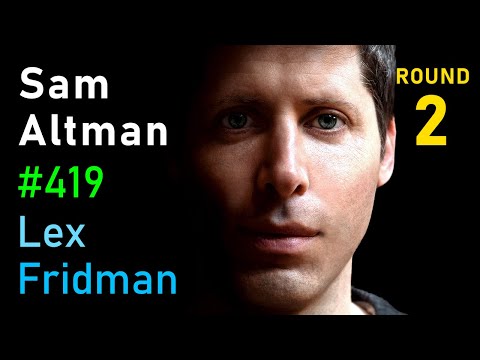
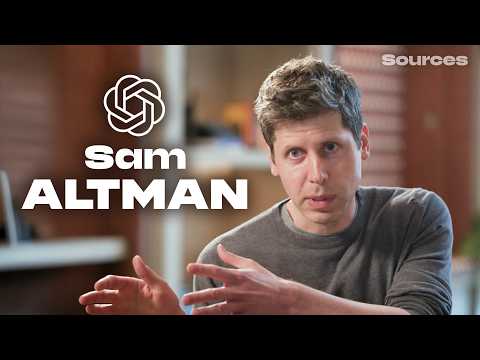
Sam Altman
Co-Founder & CEO, OpenAI · Former President of Y Combinator
The driving force behind the generative AI era. As CEO of OpenAI, Altman has overseen the creation of ChatGPT, GPT-4, and Sora. In this interview, he candidly addresses the boardroom crisis, the raw economics of compute-scaling, the nature of emergent intelligence, and the path to AGI.
⚡ Executive Summary
- On the Board Saga: Described the aftermath of his brief ouster as a “fugue state”, expressing deep personal hurt but highlighting the resilience of the OpenAI team.
- On Ilya Sutskever: Publicly affirmed tremendous respect and love for Ilya, hoping they continue to work together despite the organizational friction.
- On Sora: Noted that Sora’s underlying world models are still primitive; they lack a robust understanding of 3D geometry and real-world physics.
- On GPT-4 vs Future Models: Stated candidly that GPT-4 “kind of sucks” compared to the eventual goal, highlighting a relentless drive toward exponentially better capabilities.
- On AGI Timelines: Moved away from rigid AGI definitions, predicting instead that by the end of this decade we will possess “highly capable systems” that reshape humanity.
📌 Timestamped Insight Cards
📦 1. OpenAI Board Saga & Personal Impact [▶ @ 04:03]
“There was like this fugue state for kind of like the month after, maybe 45 days after that was I was just sort of like drifting through the days, I was so out of it. I was feeling so down.”
Deep Insight: Instead of focusing purely on the corporate drama, Altman highlighted the profound psychological toll the board saga took on him. He characterized the aftermath as a disorienting “fugue state,” underscoring the intense personal pressure inherent in leading the world’s highest-profile AI company through unprecedented turbulence.
🧠 2. Ilya Sutskever & Respect for OpenAI Leadership [▶ @ 18:57]
“I love Ilya. I have tremendous respect for Ilya. I don’t have anything I can say about his plans right now. That’s a question for him. But I really hope we work together for certainly the rest of my career.”
Deep Insight: Addressing questions surrounding Ilya Sutskever’s role during the boardroom events, Altman maintained an explicitly collaborative and forgiving stance. He emphasized his enduring respect for Ilya’s visionary technical leadership and expressed genuine hope for their continued partnership in the pursuit of AGI.
🎥 3. Sora & Spatial 3D World Modeling [▶ @ 36:24]
“Yeah, so what I would say is it’s doing something to deal with occlusions really well. What I represent that it has like a great underlying 3D model of the world… it’s a little bit more of a stretch. It looks like this approach is gonna go surprisingly far.”
Deep Insight: Despite the viral success of Sora’s hyper-realistic video generation, Altman tempered expectations regarding its fundamental “understanding.” He clarified that while the model simulates occlusion and motion dynamics impressively from 2D data, it still lacks an explicit ground-truth 3D spatial geometry model.
🚀 4. GPT-4 Capabilities & The Road to GPT-5 [▶ @ 45:08]
“I think it kind of sucks… No, I think it is an amazing thing, but relative to where we need to get to and where I believe we will get to… the tools we have now are gonna kind of suck looking backwards at them and that’s how we make sure the future is better.”
Deep Insight: This blunt self-assessment reveals OpenAI’s internal benchmark for success. Altman views GPT-4 not as a crowning achievement, but as an early, flawed stepping stone. This aggressive framing indicates that the compute and architectural leaps planned for future frontier models are expected to dwarf current capabilities.
🔮 5. Beyond the Binary “AGI” Label [▶ @ 01:32:31]
“I used to love to speculate on that question. I have realized since that I think it’s like very poorly formed and that people use extremely different definitions of AGI… By the end of this decade or possibly somewhat sooner than that, we will have highly capable systems.”
Deep Insight: Altman is pivoting away from the binary “AGI” label, recognizing that public definitions are fractured and ambiguous. Instead, he focuses on the pragmatic reality: within the next 5 to 6 years, society will be dealing with systems possessing transformative, highly generalized capabilities, regardless of acronyms.
⚡ 6. Compute as the Currency of the Future & Energy Bottlenecks [▶ @ 01:10:00]
“Look, I think compute is gonna be the currency of the future. I think it will be maybe the most precious commodity in the world. And I think we should be investing heavily to make a lot more compute… The world is gonna want a tremendous amount of compute. Energy is the hardest part.”
Deep Insight: Altman distills the future of the AI economy down to physical infrastructure bottlenecks: processing capacity and clean energy. His thesis is that intelligence will behave like an elastic utility where driving down unit cost unlocks massive societal scale, necessitating radical investments in fusion and data center power grids.