Ilya Sutskever Interview Breakdown: Key Insights on Superintelligence, Scaling & AGI
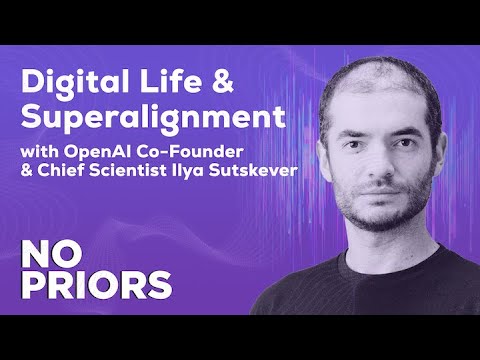
Ilya Sutskever
Co-Founder & Chief Scientist, SSI (Safe Superintelligence) · Former Chief Scientist at OpenAI
Co-creator of AlexNet and former Chief Scientist at OpenAI who directed GPT-4, DALL-E, and Superalignment research. Sutskever explores the deep mathematical essence of scaling laws, out-of-distribution generalization, and why safe superintelligence is the defining scientific challenge of our century.
⚡ Executive Summary
- Scaling Law Dynamics & Differential Improvement: Scaling compute and data remains an unbroken empirical law—the bigger you make the model, the better it gets. Crucially, different reasoning capabilities scale at different exponential rates across model generations.
- The Self-Driving Reliability Standard: The central bottleneck preventing models from executing high-stakes autonomous actions is reliability. A 95% accurate model cannot be trusted on consequential tasks without human verification.
- Biological Architecture & Unified Neocortex: Nature solved general intelligence using a remarkably uniform cortical tissue architecture; modern transformer foundation models validate this biological principle over handcrafted modular software.
- The Threshold of Digital Life: Systems transition from assistive software into autonomous “artificial life” when reliability reaches the threshold where models can independently execute multi-step workflows without supervision.
- Defining Superintelligence (SSI) via Deeper Insight: Superintelligence is not mere encyclopedic memory; it is the ability of data centers to possess fundamentally deeper scientific and conceptual insight into reality than human experts.
- The Superalignment Imperative: As autonomous superintelligent clusters are deployed, technical alignment must guarantee that non-human digital minds harbor fundamentally prosocial, humanity-loving motivations.
📌 Timestamped Insight Cards
⚡ 1. The Scaling Law Core: The Bigger You Make It, The Better It Gets [▶ @ 16:22]
“The way to think about it is that while the current thing that’s being done keeps getting better as you keep on increasing the amount of compute and data that you put into it… The bigger you make it, the better it gets. It is also the property that different things get better by different amounts as you keep on scaling them up. So, not only do we want to scale up what we’re doing, we also want to keep scaling up the best thing possible.”
Deep Insight: Sutskever articulates the empirical foundation that drove modern frontier AI: scaling compute, parameters, and datasets systematically unlocks emergent cognitive capabilities. However, scaling is not homogeneous—abstract reasoning, math, and code often experience non-linear step-function improvements compared to basic language fluency, making continuous architecture search combined with massive compute scaling the primary driver of capability leaps.
🎯 2. The Reliability Bottleneck: Self-Driving Standards for AI Cognition [▶ @ 20:00]
“If it’s a consequential decision, I actually can’t trust the model any of those times, and I have to verify the answer somehow. So, that’s how I define reliability. It’s very similar to the self-driving situation… If you have a self-driving car, and it does things mostly well, that’s not good enough… That’s what I mean by reliability.”
Deep Insight: The true friction point in enterprise AI adoption is not the ceiling of intelligence, but the floor of reliability. Similar to autonomous vehicles where a 99% success rate is unacceptable for safety, intellectual agents operating on mission-critical workflows require near-zero hallucination rates before humans can delegate end-to-end agency without continuous manual verification.
🔓 3. Open Source vs. Frontier Models: The Shifting Threshold of Safe Release [▶ @ 25:12]
“And the deal is up to a certain capability, it’s great, but not difficult to imagine models sufficiently powerful which will be built, where it becomes a lot less obvious as to the benefits of their open source… Figuring out this boundary very well is an urgent research project.”
Deep Insight: The open-source versus closed-source debate evolves alongside capability frontiers. While open-sourcing narrow or moderately capable models provides immense educational and economic value, sufficiently autonomous models with advanced biological, cyber, or self-replicating capabilities introduce irreversible systemic risks, necessitating rigorous safety evaluation thresholds before public weights release.
🧠 4. Unified Neural Architecture: Lessons from Biological Neocortex Uniformity [▶ @ 29:53]
“These are fairly well-known ideas in AI that the cortex of humans and animals are extremely uniform… We are very much on the right track. Because you have all these interesting analogies between human intelligence and biological intelligence and artificial intelligence: artificial neurons, biological neurons, unified brain architecture for biological intelligence, unified neural network architecture for artificial intelligence.”
Deep Insight: Drawing from neuroscience experiments where animal sensory nerves reroute into auditory or visual cortices and adapt identically, Sutskever emphasizes that nature’s general intelligence runs on uniform computational substrate. This strongly validates the deep learning paradigm: a single, scalable transformer architecture is far more capable of general intelligence than fragmented, domain-specific rule engines.
🤖 5. The Transition from Useful Tool to Autonomous Digital Life [▶ @ 30:55]
“I think that will happen when those systems become reliable in such a way as to be very autonomous. Right now, those systems are clearly not autonomous… As the usefulness increases, they will indeed become more like artificial life… If you imagine actual artificial life with brains that are smarter than humans, that seems pretty monumental.”
Deep Insight: Sutskever defines the philosophical boundary between software and “artificial life” around autonomous operational reliability. When a model can be handed an open-ended goal—such as writing complex software or conducting automated research—and reliably achieve it across days without failing or hallucinating, it ceases to be a mere autocomplete tool and functionally becomes an autonomous digital agent.
🛡️ 6. Superintelligence & The Superalignment Imperative: Cultivating Prosocial AI [▶ @ 34:01]
“Data centers that are much smarter than people. And by smarter, I don’t mean just have more memory or have more knowledge, but also have deeper insight into the same subjects that we people are studying and looking into. It means learn even faster than people… If such very, very intelligent superintelligent data centers are being built, we want those data centers to hold warm and positive feelings towards people, towards humanity.”
Deep Insight: True superintelligence is characterized by super-human conceptual depth and rapid learning velocity. Because these clusters will operate with vast speed and agency, alignment cannot simply rely on post-hoc guardrails; it requires solving the fundamental science of Superalignment so that autonomous digital minds inherently preserve, protect, and act prosocially toward human values.
🚀 7. Accelerating vs. Decelerating Forces on the Road to AGI [▶ @ 39:26]
“Some forces are accelerating forces and some forces are decelerating. So for example, the cost and scale are a decelerating force… On the other hand, the amount of investment is an accelerating force. The amount of interest from people, from engineers, scientists is an accelerating force. And there is one other accelerating force: the fact that biological evolution has been able to figure it out.”
Deep Insight: The timeline to AGI is governed by a dynamic tug-of-war between physical constraints and compounding momentum. While capital expenditure, data limits, and cluster management complexity act as natural drag coefficients, the unprecedented concentration of global talent, compute investment, and the algorithmic proof of concept provided by biological evolution constitute an overwhelmingly potent accelerating engine.