Demis Hassabis Interview Breakdown: Key Insights on AGI, AlphaFold & World Simulation
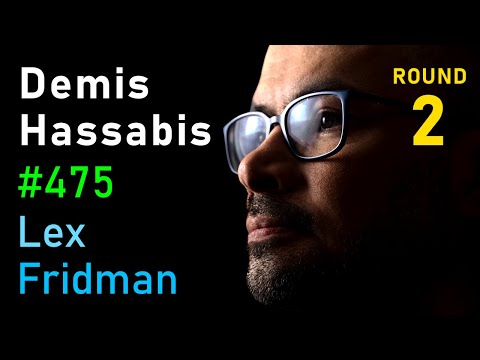
Demis Hassabis
Co-Founder & CEO, Google DeepMind · Nobel Laureate in Chemistry (2024)
Nobel laureate, neuroscientist, and founder of DeepMind. From conquering chess and Go with AlphaZero to revolutionizing structural biology with AlphaFold, Hassabis discusses DeepMind's roadmap toward 2030 AGI, grounding Gemini with world simulation models, and the upcoming Virtual Cell.
⚡ Executive Summary
- 2030 AGI Timeline & The “Terence Tao” Test: Hassabis places a ~50% probability on achieving AGI by 2030, defining it not as “jagged” narrow competence, but as general human-level cognitive breadth stress-tested by hundreds of world-class domain authorities.
- The 25-Year “Virtual Cell” Vision: DeepMind’s progress from AlphaFold to AlphaGenome is paving the way toward full in silico cellular simulation, compressing decades of wet-lab biological experimentation into high-throughput digital computation.
- Hybrid AI Architecture over Pure LLMs: Next-token autoregression alone cannot solve frontier science; combining foundation models with Monte Carlo Tree Search (MCTS), evolutionary computation (AlphaEvolve), and formal verification is essential for genuine discovery.
- World Models & Physics Simulation in Veo 3: Video generation models are evolving beyond pixel generation into implicit physics simulators, learning latent representations of 3D geometry, gravity, and fluid dynamics necessary for embodied intelligence.
- Three-Dimensional Scaling Dynamics: Scaling is simultaneously advancing across pre-training, post-training, and test-time compute, split 50/50 between brute-force computational scaling and foundational scientific inventions.
- Scientific Guardrails over Arbitrary P(doom): Rejecting speculative p(doom) numbers, Hassabis advocates for “cautious optimism” backed by a 10x increase in rigorous empirical safety research as systems approach human-level generalization.
📌 Timestamped Insight Cards
⚡ 1. The 2030 AGI Timeline & The “Terence Tao” Benchmark [▶ @ 52:33]
“My estimate is sort of 50% chance by in the next five years… So, you know, by 2030 let’s say… For us to know we have a true AGI, we would have to make sure that it has all those capabilities. It isn’t kind of a jagged intelligence where some things it’s really good at like today’s systems, but other things it’s really flawed at… One way to do it would be make the system available to a few hundred of the world’s top experts, the Terence Taos of each subject area, and see if they can find an obvious flaw in the system.”
Deep Insight: Hassabis sets an uncompromising bar for Artificial General Intelligence: matching the full cognitive versatility of the human brain without catastrophic hallucinations or domain gaps (“jagged intelligence”). Because static benchmarks saturate rapidly, true AGI verification requires open-ended empirical stress-testing by leading domain masters who actively attempt to probe and break the system’s reasoning models.
🔬 2. The 25-Year “Virtual Cell” Vision & Digital Biology [▶ @ 42:36]
“I’ve had this idea, you know, of wanting to do that for maybe more like 25 years… What would you need to model of the full internals of a cell so that you could do experiments on the virtual cell… in silico? And those predictions would be useful for you to save you a lot of time in the wet lab, right? That would be the dream. Maybe you could 100X speed up experiments by doing most of the search in silico, and then you do the validation step in the wet lab.”
Deep Insight: DeepMind’s milestones—AlphaFold (3D protein folding), AlphaFold 3 (DNA/RNA/ligand complexes), and AlphaGenome (genetic mutation effect modeling)—are modular stepping stones toward a grand scientific goal: an end-to-end “Virtual Cell.” Simulating molecular biology in silico transforms therapeutic discovery from slow, trial-and-error chemistry into high-speed digital engineering.
🧬 3. Hybrid AI Architectures: Combining LLMs with Search & Evolution [▶ @ 31:39]
“I think it’s an example of very promising directions where you combine LLMs or foundation models with other computational techniques. Evolutionary methods is one, but you could also imagine Monte Carlo Tree Search… search algorithms or reasoning algorithms sort of on top of or using the foundation models as a basis. I actually think there’s quite a lot of interesting things to be discovered probably with these sort of hybrid systems.”
Deep Insight: Pure generative language models are prone to logical drift. Breakthrough systems like AlphaEvolve and AlphaProof demonstrate that combining generative neural nets (which propose creative hypotheses) with structured search algorithms (MCTS, evolutionary algorithms, and formal mathematical verifiers) creates self-improving hybrid engines capable of solving novel algorithmic problems beyond human training distributions.
🎥 4. Veo 3 & World Models: Intuitive Physics over Superficial Video [▶ @ 15:25]
“I think to the extent that it can predict the next frames, you know, in a coherent way, that is a form, you know, of understanding, right?… They certainly have modeled enough of the dynamics, you know, put it that way, that they can pretty accurately generate video that by eye at least… it’s quite hard to distinguish what the issues are… The thing I’m most impressed with and fascinated by is the physics behavior.”
Deep Insight: High-fidelity video generation models like Veo 3 are fundamentally spatial-temporal world simulators. Predicting consistent multi-frame video requires the neural network to implicitly internalize laws of physics—momentum, lighting continuity, gravity, and 3D geometry—providing a vital perceptual backbone for future robotics and autonomous embodied agents.
📈 5. Three Concurrent Scaling Dimensions & Deep Research Frontiers [▶ @ 01:03:16]
“So actually all steps: pre-training, post-training, and inference-time. There’s sort of three scalings that are happening concurrently… I would say it’s kind of 50/50 whether new things are needed or whether the scaling of the existing stuff is gonna be enough. In true empirical fashion, we are pushing both of those as hard as possible: the new blue sky ideas… and scaling to the max the current capabilities.”
Deep Insight: AI capability expansion is no longer confined to brute-force pre-training clusters; compute is shifting dynamically into post-training reinforcement learning and test-time reasoning search. Hassabis views the trajectory as a balance between brute-force compute scaling and foundational algorithmic breakthroughs, backed by Google DeepMind’s deep research bench to invent new architectures when current paradigms reach asymptotic plateaus.
💻 6. Software 3.0: 10x Superhuman Engineers & Architecture-First Programming [▶ @ 01:43:28]
“For the next era, like the next five, 10 years, I think what we’re gonna find is people who embrace these technologies become almost at one with them… The great programmers will be even 10X what they are today… The top programmers will still have huge advantages in terms of specifying what the architecture should be, how to guide these coding assistants in a way that’s useful, and check whether the code they produce is good.”
Deep Insight: AI coding tools will not eradicate software engineering; they eliminate low-level boilerplate and accelerate feedback loops. Developers who master AI orchestration will gain 10x leverage, transitioning from line-by-line syntax writers to high-level systems architects who define constraints, architect complex state flows, and verify autonomous agent output.
🛡️ 7. P(doom) Precision Fallacy & The Scientific Method for AI Safety [▶ @ 01:58:16]
“I don’t have a p doom number. The reason I don’t is because I think it would imply a level of precision that is not there… It’s definitely non-zero and it’s probably non-negligible… Under those conditions of a lot of uncertainty, but huge stakes both ways… the only rational, sensible approach is to proceed with cautious optimism… and use the scientific method to do more research to try and more precisely define those risks and of course address them. I think there probably needs to be 10 times more effort of that than there is now as we are getting closer and closer to the AGI line.”
Deep Insight: Assigning a precise percentage to existential risk creates a false illusion of mathematical certainty in a regime of extreme scientific ambiguity. Hassabis advocates for “cautious optimism” executed through empirical research—mechanistic interpretability, safety evaluations, and international cooperation—to preempt catastrophic failure modes while unlocking transformative global benefits across medicine and climate.