Dario Amodei Interview Breakdown: Key Insights on Claude, AGI & 'Machines of Loving Grace'
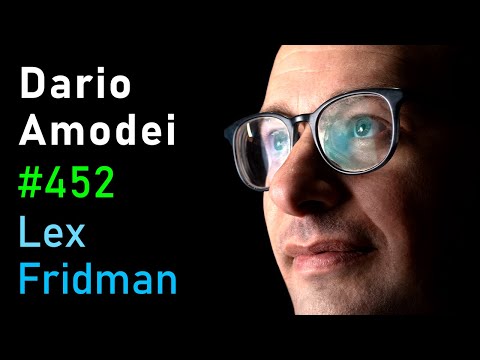
Dario Amodei
Co-Founder & CEO, Anthropic · Former VP of Research at OpenAI
A biophysics PhD from Princeton and pioneer of modern AI scaling laws. As CEO of Anthropic, Amodei drives the development of frontier Claude models and the Responsible Scaling Policy, balancing aggressive compute scaling ($100B clusters) with catastrophic risk mitigation.
⚡ Executive Summary
- Scaling Trajectory & Capital Intensity: Scaling laws continue to hold predictably across modalities, pushing frontier model training clusters from $1B in 2025 to $10B in 2026 and $100B+ by 2027.
- AGI Definition & 2026–2027 Horizon: Amodei frames “Powerful AI” not as a single monolith, but as millions of autonomous instances operating 10x–100x faster than human experts, likely materializing by 2026–2027 if straight-line progress continues.
- Agentic Computer Use: Grounding pre-trained multimodal models into human GUIs allows AI to escape the “gravity” of narrow tasks, operating browsers, terminals, and software in a continuous feedback loop.
- Asymmetric Risk & Responsible Scaling: The greatest immediate danger of frontier AI is breaking the historical barrier between malevolent intent and deep technical competence (e.g., biological/cyber threats), necessitating strict AI Safety Levels (ASL-3/ASL-4).
- The “Machines of Loving Grace” Vision: Safety mitigation is not about slowing technology down, but ensuring humanity survives the transition gauntlet to unlock radical abundance—curing major diseases, doubling human lifespan, and eradicating global poverty.
📌 Timestamped Insight Cards
⚡ 1. Scaling Laws & The $100B Cluster Trajectory [▶ @ 18:38]
“I think next year, we’re gonna go to a few billion, and then 2026, we may go to, you know, above 10 billion, and probably by 2027, their ambitions to build 100 billion dollar clusters, and I think all of that actually will happen.”
Deep Insight: Amodei outlines the exponential capital and compute trajectory underpinning frontier AI. The industry is moving rapidly through orders of magnitude in training cluster costs—from hundreds of millions today to $10B in 2026 and $100B+ by 2027. Because empirical scaling curves remain unbroken, the primary determinants of model intelligence are physical scaling, energy availability, and algorithmic efficiency.
🛡️ 2. AI Safety Levels & The Risk of Breaking the Intent-Competence Correlation [▶ @ 56:31]
“I think actually humanity has been protected by the fact that the overlap between really smart, well-educated people and people who want to do really horrific things has generally been small… My worry is that by being a much more intelligent agent, AI could break that correlation.”
Deep Insight: The core thesis behind Anthropic’s Responsible Scaling Policy (RSP) and AI Safety Levels (ASL) is managing asymmetric uplift. Historically, executing catastrophic harm (such as biological or chemical weapon synthesis) required rare, multi-year specialized training. Frontier AI threatens to lower this barrier by serving as an actionable expert assistant, making strict containment (ASL-3/ASL-4 protocols) vital before models gain actionable CBRN capabilities.
💻 3. Computer Use & Escaping Narrow Task Gravity [▶ @ 01:10:46]
“If you get to lower earth orbit, you’re like halfway to anywhere, right? Because of how much it takes to escape the gravity. Well, if you have a strong pre-trained model, I feel like you’re halfway to anywhere in terms of the intelligence space.”
Deep Insight: Giving Claude the ability to interact with standard operating systems via screenshots and mouse/keyboard clicks represents a major leap in general-purpose agent workflows. Rather than engineering custom APIs for every task, general pre-training provides the cognitive base (“low-Earth orbit”), allowing the model to adapt to arbitrary desktop interfaces and execute multi-step computer tasks with minimal extra fine-tuning.
🕊️ 4. “Machines of Loving Grace” & Navigating the Risk Gauntlet [▶ @ 02:00:16]
“And the whole reason we’re trying to prevent these risks is not because we’re afraid of technology, not because we wanna slow it down. It’s because if we can get to the other side of these risks… then on the other side of the gauntlet are all these great things and these things are worth fighting for.”
Deep Insight: Amodei rejects the false dichotomy between doomerism and reckless accelerationism. Anthropic’s heavy investment in safety protocols is not aimed at stalling progress, but at safely navigating the narrow “gauntlet” of transition risks. On the other side lies a “compressed 21st century,” where 50 to 100 years of biological and medical discovery are condensed into just 5 to 10 years.
🧠 5. Defining Powerful AI: Deploying a Virtual Country of Geniuses [▶ @ 02:05:03]
“You might imagine from outside the field that like, there’s only one of these, right?… But the truth is that like, the scale up is very quick… Clusters are gonna get to the size where you’ll be able to deploy millions of these and they’ll be faster than humans. So if your picture is, ‘Oh, we’ll have one and it’ll take a while to make them’—no, actually you have millions of them right away.”
Deep Insight: Amodei deconstructs the term “AGI” in favor of “Powerful AI.” He describes a concrete system: a software model that is smarter than a Nobel Prize winner across all major disciplines, controls digital and lab tools, and can be instantly replicated across data centers into millions of independent agents working 10x–100x faster than human researchers.
🚀 6. The Coding Singularity: From 3% to 90% Benchmark Saturation [▶ @ 02:31:14]
“On typical real world programming tasks, models have gone from 3% in January of this year to 50% in October of this year… In another 10 months, we’ll probably get pretty close. We’ll be at least 90%. So again, I would guess, you know… 2026, 2027.”
Deep Insight: Programming is accelerating faster than other cognitive domains because software allows AI to “close the loop”—generating code, executing it, observing the error feedback, and iterating autonomously. As AI systems approach 90%+ competence on routine software engineering, human engineers will increasingly operate at higher levels of abstraction: system architecture, product direction, and UX design.
🔬 7. Mechanistic Interpretability: Peeking Inside the Neural Black Box [▶ @ 24:52]
“This was an experiment where we found a direction inside one of the neural network’s layers that corresponded to the Golden Gate Bridge and we just turned that way up… And you could ask it about anything… because this feature was activated, would connect to the Golden Gate Bridge.”
Deep Insight: Using Sparse Autoencoders (SAEs), Anthropic researchers successfully decomposed polysemantic neural activations into interpretable features—demonstrated humorously yet profoundly by “Golden Gate Claude.” This proves that neural networks are not permanently inscrutable black boxes, and establishes a scientific foundation for safety auditing and direct concept steering inside frontier models.